
"large scale"
6000 article(s) found

Sumatra Coffee Culture description and treatment Variety characteristics Grinding scale introduction
Sumatra Coffee Culture description treatment Variety characteristics Grinding scale introduces that 11 million people in Indonesia depend on coffee for a living. An excerpt from Sumatran coffee with a large cup of Sumatran coffee in hand, a wonderful warm and mellow feeling arises spontaneously. To me, this feeling is different from any other coffee. Take the first sip of this wonderful brewed coffee

The difference between washing and Solar Flavor of Kenyan Coffee describes the varieties produced by grinding scale
The difference between washing and tanning of Kenyan coffee describes that the flavor of sunburn Yega in the grinding scale production area is much more than that of water washing, the most obvious is the aroma of red wine, if beans and baking are all right, it is simply that the human delicacy is mellow than washing, the front may be a little bitter, the latter has a strong fruit flavor, the key is that there is no lack of Yega Xuefei unique fruit acid in Kenya's northern neighbor.

Introduction to the production area of grinding scale varieties of coffee with Liberian flavor description treatment method
Coffee bean Ethel sa was discovered in 1904, a variety originated in the Charlie River Basin in Africa, small fruit, high yield per plant, especially a drought-resistant variety. The product has a strong flavor, slightly bitter taste, cultivated less Liberian species, that is, large-grained species, originated in Liberia in Africa, as well as Malaysia and other few countries. Its cultivation history is slightly shorter than that of the other two coffee trees.

Brief introduction of Colombian Coffee Bean Flavor description Taste Grinding scale Variety producing area
Brief introduction of Colombian Coffee Bean Flavor description texture Grinding scale Variety producing area Colombian Coffee is mainly small-grain Coffee. Plants are small trees or large shrubs, 5-8 m tall, usually much branched at base; old branches gray-white, nodes dilated, young branches glabrous, compressed. Leaves thinly leathery, ovate-lanceolate or lanceolate, 6-14 cm long and 3.5-5 cm wide, tip long acuminate, acuminate

Flavor description of Pacamara Coffee Bean introduction of regional varieties produced by grinding scale treatment
Flavor description of Pacamara Coffee beans Grinding scale Taste treatment area varieties introduced savanna climate. The plain area belongs to the tropical rain forest climate and the mountain area belongs to the subtropical forest climate. The average annual temperature is 25-28 ℃, the annual precipitation is more than 1800 mm in mountainous areas and about 1000 mm in coastal areas. The rainy season from May to October is of positive significance to the aroma of coffee. In 2005, Salva

Columbia Na Linglong Flavor Grinding scale Coffee Bean area
Columbia Na Linglong Flavor Grinding scale Coffee beans are produced in the manor area of Colombia, like other producing areas in Colombia, which produces a large amount of fine coffee every year, including this model student. The model student, which is supervised by the famous la minita, is a Colombian boutique coffee and the essence of the Narino producing area.

Flavor Description of Tanzania AA Coffee Bean Taste Treatment Grind Scale Variety
Flavor Description of Tanzania AA Coffee Bean Taste Treatment Grind Scale Variety Tanzania Coffee Origin: Tanzania Coffee Bean Berry Coffee is produced in large quantities and is said to be stronger than regular coffee. Generally speaking, Tanzanian coffee beans are of exceptional quality. For example, it is produced in Moshi District near Kilimanjaro Mountain.
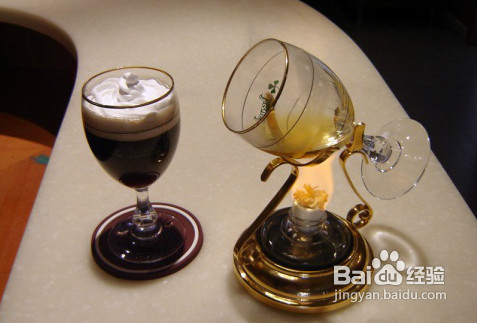
Description of Flavor of Yunnan small-grain Coffee Bean Flavor introduction to Grinding scale of varieties
Yunnan small-grain coffee beans Huaguoshan flavor description, characteristics of varieties grinding scale introduced that coffee cultivation in China is concentrated in Yunnan Province and Hainan Province. Yunnan has a large output, with an annual output of about 26000 tons in recent years, accounting for 90% of the national output. It is said that Yunnan coffee came from the French 70 or 80 years ago. The main variety is Arabica Arabica, the so-called small seed coffee, commonly known as Yun in China.

Starbucks computer system crashed on a large scale, and some stores gave away free coffee.
Professional baristas Please follow the Coffee Workshop (official Wechat account cafe_style) according to foreign media reports, residents in most parts of the United States and Canada did not drink Starbucks coffee for more than a day because the computer system of the coffee chain crashed. The coffee crisis, which began at 2:00 eastern time on Tuesday, has not yet been fully resolved. The company admitted that
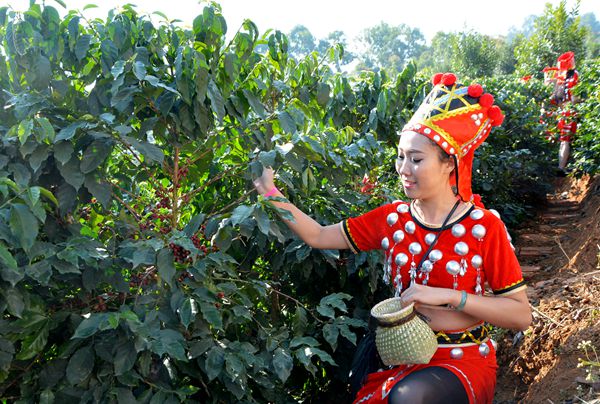
An introduction to Yunnan Coffee in China Yunnan coffee is distributed in Baoshan, Nawenshan, Simao, Yunnan.
Yunnan Coffee in China was planted on a large scale in the mid-1950s, with a planting scale of 4000 hectares. By the end of 1997, the planting area of coffee in the province had reached 7800 hectares. At present, the planting area of the province accounts for 70% of the national area, and the output accounts for 83% of the whole country. Yunnan coffee has established the dominant position in China in terms of planting area and coffee bean production. Cloud

Introduction to the varieties of Salvadoran coffee beans produced by grinding scale
El Salvador coffee bean flavor description taste grinding scale production area variety introduction in El Salvador, Cuscarpa region is the best coffee beans, its weight is light, aromatic, pure, slightly sour. Like Guatemala and Costa Rica, coffee in El Salvador is graded according to altitude, and the higher the altitude, the better the coffee. The best brand is Pip.

Description of geographical flavor of Sumatran coffee introduction of fine coffee beans in grinding scale production area
Sumatran Coffee Geographic Flavor description Grinding scale production area boutique Coffee Bean introduction Sumatra occupies the national territory of Indonesia. This is a veritable treasure trove of creatures. There are 176 species of mammals alone on the island. In addition, there are many reptiles and amphibians. The animals on the island include orangutans, various apes, elephants, tapirs, tigers,

A trip to coffee beans
Following the five coffee giants Nestl é, Maxwell, Kraft, Newman and Ikham, Starbucks, which calls itself a "real coffee company", recently joined the ranks of coffee buyers in Yunnan, China, where it will establish its first coffee planting base in the world.

Salvadoran Pacamara coffee boutique bean flavor description processing method taste characteristics grinding scale simple
Pacamara bean shape is too large, in the treatment field for peeling and separation, often stuck in the holes or gaps of the machine, the machine must be adjusted from time to time to deal with separately. Due to the limited initial output of Pacamara and the rare fruits of large seeds in sa, most washing plants lack experience in dealing with large coffee fruits, not to mention extra sieves with larger mesh to specially deal with Pacamara species.

Introduction to Grinding scale of Flavor description in Coffee Bean Manor in Kenya
Kenya Coffee Farm Flavor description Taste method Grinding scale introduces that the Kenyan government takes the coffee industry very seriously, where it is illegal to cut down or destroy coffee trees. Kenyan coffee buyers are world-class high-quality coffee buyers, and no other country can grow, produce and sell coffee on a continuous basis like Kenya. All the coffee beans are first made by Ken.

Introduction to the grinding scale of El Qomolangma coffee varieties taste treatment method
Salvadoran coffee ranks side by side with Mexico and Guatemala as the producers of Asa and Merdo, and is fighting for the top one or two places in China and the United States with other countries. The highlands of origin are large coffee beans of all sizes, which are fragrant and mild in taste. Like Guatemala and Costa Rica, coffee in El Salvador is graded according to altitude. The higher the altitude, the better the coffee.

Brief introduction of grinding scale production area for description of altitude flavor of Colombian coffee beans
Brief introduction of Columbia Coffee Bean Flavor description characteristics Grinding scale production area the main varieties of Colombian coffee are Arabica coffee (coffea arabica), that is, small fruit coffee (small grain coffee), while large fruit coffee (coffea robusta) is mostly grown in Africa of origin, such as the famous Malagasy coffee. There are several varieties of small fruit coffee, world output

Description of taste and flavor of Brazilian yellow bourbon coffee grinding scale by treatment in producing area
Brazil yellow bourbon coffee taste description grinding scale Brazil's three major boutique coffee producing areas are Syrador, South Minas and Mojiana in the central and western part of Minas province. Brazil's yellow bourbon is located in the Hirado region of Brazil. However, not all coffee produced in the prairie of Syracuse can bear the name of Syracuse, which is limited to 1100 to 1300 meters above sea level in the central and western part of Minas province.

Introduction to El Salvador Coffee Bean Flavor description Grinding scale treatment Manor
Salvadoran coffee ranks side by side with Mexico and Guatemala as the producers of Asa and Merdo, and is fighting for the top one or two places in China and the United States with other countries. The highlands of origin are large coffee beans of all sizes, which are fragrant and mild in taste. Like Guatemala and Costa Rica, coffee in El Salvador is graded according to altitude, and the higher the altitude, the better the coffee

Kenyan coffee producing area Manor characteristics Grading taste quality Grinding scale Introduction
Bourbon Bourbon was first brought to Kenya for cultivation. In the 1950s, Scott Laboratory, an agricultural research institution at that time, made unremitting efforts to select SL-28 and SL-34, two excellent hybrids, which overturned the long-term artificial breeding varieties without excellent natural varieties.